
SEO isn’t dead. In fact, search engine optimization is still a key factor in online visibility, even as AI changes how people access information. Google continues to handle over 83% of searches and billions of daily queries. Businesses that adjust to these changes will succeed.
This post explores the debate around “Is SEO Dead,” looks ahead to the future of SEO in 2026, and reveals trends involving AI in SEO. You’ll learn how AI is transforming SEO and what it means for marketers like you. Supported by real data and expert insights, this guide highlights why human expertise continues to matter.
Table of Contents
Why People Ask “Is SEO Dead”
People ask “Is SEO Dead” because it seems like the ground is shifting beneath them. I’ve experienced it too, watching traffic drop after a Google update and questioning whether all those late nights spent optimizing were worth it. As someone who creates content and builds SmartSaathi with posts about colleges and AI tools, you understand the panic when AI-generated overviews take your clicks, or when ChatGPT provides answers without directing readers to your site. In 2024-2025, zero-click searches reached 65% on desktop, meaning users get information from summaries instead of visiting links.
It’s natural to fear change. Marketers notice competitors using AI in SEO to produce content quickly, while major updates like Helpful Content penalize low-quality pages, causing traffic for even top sites to drop by 20-30%. Social platforms like TikTok and Reddit take away discovery, changing where people search. Large language models like Gemini pull information from everywhere, making traditional rankings seem less important.
But my experience shows that this question leads to growth, not decline. How AI is changing SEO reveals weaknesses, pushing us toward providing real value. In the future of SEO in 2026, sharing genuine experiences—such as student reviews or my own SEO successes—will help you stand out. SEO in the AI era rewards creators who embrace change, transforming uncertainty into opportunity. Ask yourself: Are you focusing on building trust, or merely chasing algorithms? That’s where the real impact lies.
The Future of SEO 2026: Key Shifts Ahead
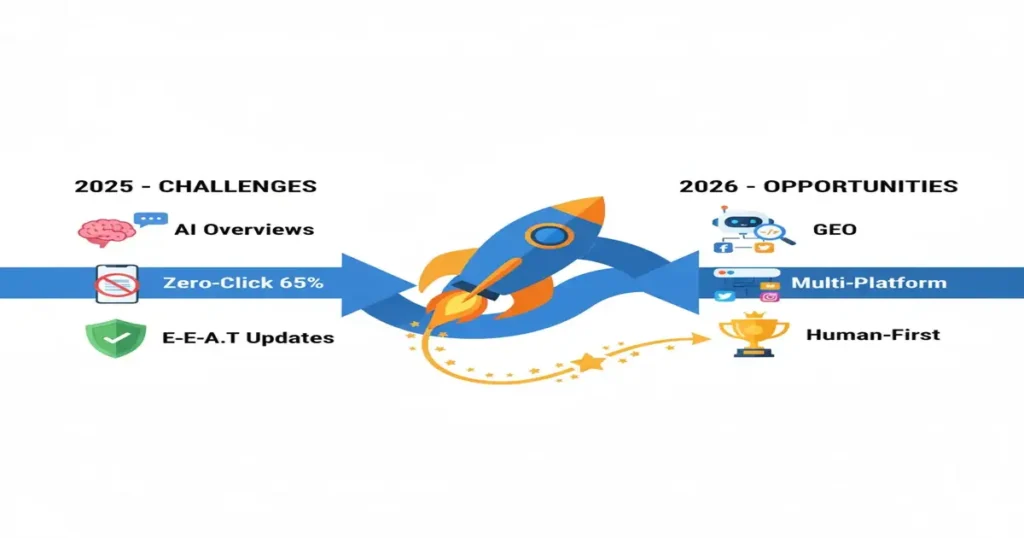
In the future of SEO in 2026, expect E-E-A-T (Experience, Expertise, Authoritativeness, Trustworthiness) to become the leading ranking factor. Human-focused content will outperform AI-generated spam as search engines remove low-quality pages.
Tactics for branded searches will increase, with users gravitating towards reputable names in a fragmented search environment—think ChatGPT, TikTok, and Reddit. You’ll need Generative Engine Optimization (GEO) alongside traditional SEO to ensure you get cited in AI responses.
Privacy-conscious personalization using first-party data will become crucial as cookies phase out. By 2026, visibility will expand beyond Google to include AI interfaces and platforms like YouTube.
AI in SEO: Tools That Boost Efficiency
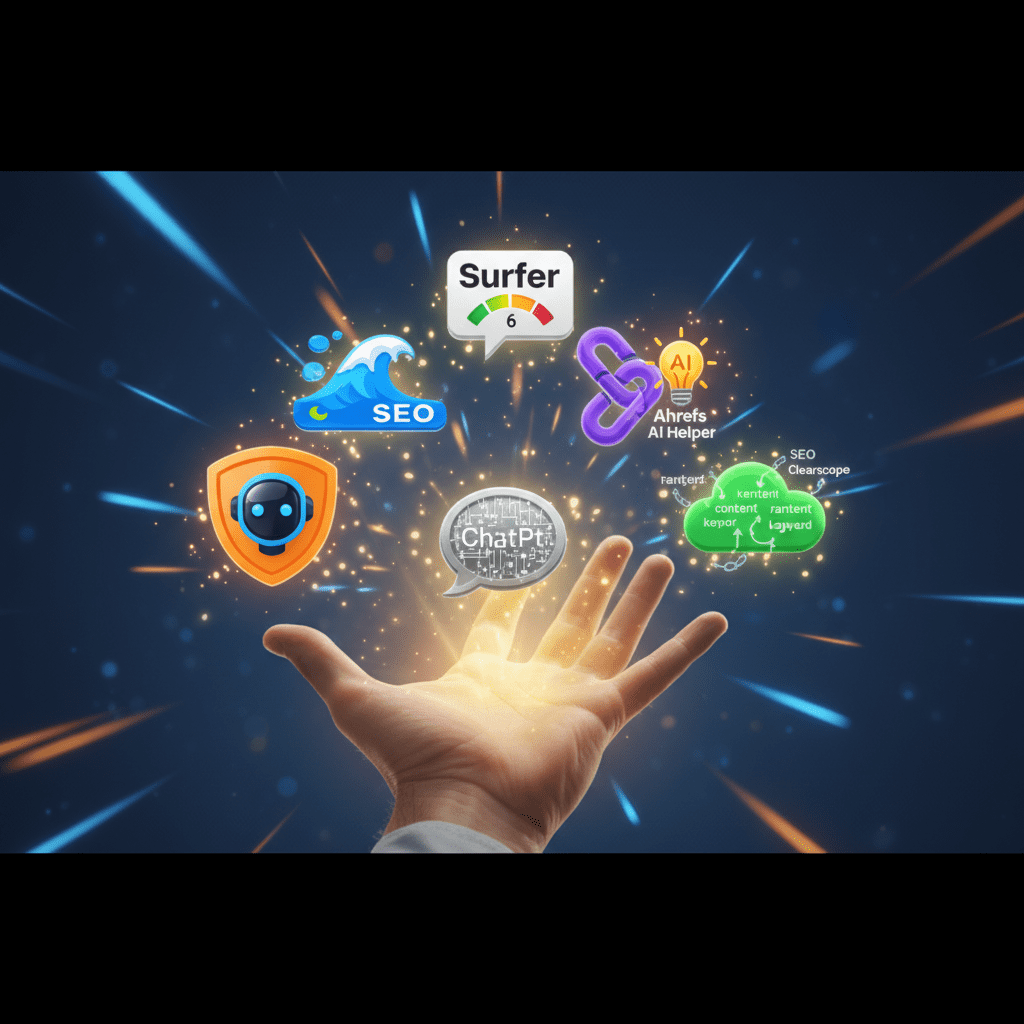
Using AI in SEO feels like having a smart assistant in your day-to-day work. I’ve relied on these tools while optimizing SmartSaathi posts for college reviews and AI trends, reducing hours of manual effort to just minutes. Initially skeptical, I now see that 86% of professionals like us trust these tools to make SEO smarter, not harder. They handle tedious tasks, allowing you to bring a human touch—like including authentic student stories that AI can’t replicate.
These tools excel by automating keyword research, identifying content gaps, and quickly auditing technical issues. How is AI changing SEO? It forecasts trends through natural language processing, interprets intent from voice queries, and refines headlines based on user engagement—real game-changers in the SEO in AI era.
Here’s what I rely on most, along with my genuine experiences using them:
- Semrush Copilot: Analyzes your data for custom fixes, like resolving toxic backlinks or keyword gaps. It saved me weeks on site audits.
- SurferSEO: Offers live content scoring while you write, targeting optimal natural language processing terms and structure. My posts rank faster after adjustments.
- Clearscope: Evaluates content against top pages, recommending improvements for readability. It’s ideal for providing E-E-A-T proof in long-form guides.
- ChatGPT: A free tool for brainstorming outlines and clustering. I enter data specific to my niche for tailored ideas and then edit them myself.
- Ahrefs Content AI Helper: tool that helps you create better, SEO-optimized content using AI and real search data.
In the future of SEO in 2026, combine these tools with your personal experience—AI drafts need your voice to create trust. But remember this: AI drafts require human refinement. Search engines prioritize engaging, trustworthy content over generic outputs.
How AI Is Changing SEO Practices

How AI is changing SEO starts with better understanding user queries. Models like BERT and GPT-4 focus on context, not just keywords, emphasizing intent over keyword stuffing.
The rise of voice search and conversational queries demands natural language content. AI predicts these trends, identifying high-potential keywords early.
Technical SEO is also evolving. AI automates schema markup, mobile optimization checks, and page speed improvements. Link building is becoming predictive, focusing on patterns that can enhance authority.
Content strategy is shifting from volume to value. AI generates a lot of content, but human experience stands out—think comprehensive guides rich in personal insights.
- Keyword Evolution: Focus on semantic clusters rather than exact match.
- UX Signals Rule: Dwell time matters more than backlinks alone.
- Real-Time Optimization: Adjust elements in real-time with AI feedback.
SEO in AI Era: Strategies That Win
In the SEO in AI era, aim for both traditional search results and generative answers. Transition from simply ranking in top spots to gaining citations in AI responses using structured data and authority signals.
While 86% of marketers are adopting AI methods, success depends on integrating them with E-E-A-T. Share real case studies, like how banks adjust to AI-driven SERPs to maintain visibility.
Mastering multiple platforms is essential. Optimize for Amazon, social media, and large language models where users conduct their research. Black-hat AI tactics will fail, as search engines prefer transparency.
Practical steps:
- Use AI audits to identify gaps, then enrich your content with personal stories..
- Utilize llms.txt files for AI visibility.
- Focus on engagement metrics rather than rankings.
Real Data Proving SEO’s Vitality
The numbers are clear. Google processes billions of searches daily and holds a market share of 83.54%, despite competitors. AI needs human-generated content; without it, models struggle.
Semrush data shows that disruptions can create opportunities, and traffic rebounds for quality sites after updates. By 2027, the demand for AI chatbots and multilingual content will surge, but SEO professionals using AI will see revenue increases.
In 2025 tests, human-edited AI content outperformed purely AI-generated content or traditional methods. Sites that exhibit E-E-A-T recover more quickly from volatility.
Challenges and Myths Busted
Myth: Is SEO Dead because of AI overviews? Reality: They drive discovery and attract users to sources.
Challenge: Fragmented search. Solution: Diversify strategies to fit platforms that resonate with your audience.
AI companies face challenges with client retention as customers increasingly expect human involvement. Relying too heavily on tools can lead to bland content that fails to engage.
Actionable Tips for Your SEO Game Start today:
- 1. Build E-E-A-T through bylines, credible sources, and demonstrations of experience.
- Integrate AI into your SEO research, but not for creative writing.
- Prepare for the future of SEO in 2026 by focusing on GEO—aim to be mentioned in AI responses.
- Observe changes in SEO resulting from AI by using tools that track SERP features.
- Test your strategies in the SEO in AI era by querying ChatGPT about your niche—see if you show up.
Why Humans Still Lead SEO
Experience matters greatly. I’ve refined sites through updates, seeing the initial hype around AI fade. While these tools can speed up processes, developing a strategy requires intuition—like knowing when to shift from keyword targeting to conversational engagement.
In the SEO in AI era, top performers blend technology with trust. Change is essential, or you could fall behind.
Conclusion
Ultimately, asking “Is SEO dead?” stems from concern, not reality. Search, users, and AI have all evolved, but SEO’s fundamental purpose remains the same: connecting individuals with solutions. Outdated approaches like keyword stuffing and low-quality content are waning, while smart, sustainable strategies are thriving.
The future of SEO in 2026 will favor those who combine fundamentals—such as site speed, mobile user experience, and internal links—with AI in SEO. Use AI for research and idea generation, but apply your insight to maintain authenticity. Tools can expedite your work, but your personal experience, voice, and understanding of your audience will make it exceptional.
As AI changes SEO, it rewards intent-driven, contextually rich content. Search engines now prioritize E-E-A-T, elevating expert, trustworthy material. In the SEO in the AI era, it’s vital to optimize beyond Google and ensure citations in chatbots, social, and large language models. Commit to quality: Build authority, deliver value, and utilize AI ethically. SEO won’t just survive; it will drive your growth for years to come. Those who adapt will come out on top.
If you enjoyed diving into whether “Is SEO Dead” and how AI is reshaping search, you’ll probably love our previous deep-dive: “Instagram vs Facebook: A Powerful 2026 Guide to Smarter Social Media Decisions.” In that guide, we break down which platform is better for your niche, how algorithms treat content differently, and where you should invest your time and budget if you’re serious about growth in 2026. It’s written in the same simple, no-fluff style—packed with real examples, practical tips, and insights you can apply to your own brand or college project today.
So once you’re done planning your SEO moves for the AI era, tap into that blog and sharpen your social media strategy too. Your digital presence doesn’t win on search or social anymore—it wins when both work together.
Is SEO Dead in 2025 or 2026?
No, SEO is not dead—it’s evolving rapidly. Google still powers over 83% of searches, and quality sites rebound from updates by focusing on E-E-A-T and user experience. AI Overviews reduce clicks but increase discovery for cited sources, with traffic opportunities growing for adapted strategies.
What is the Future of SEO 2026?
The future of SEO 2026 emphasises Generative Engine Optimization (GEO), multi-platform visibility (YouTube, social), and first-party data for personalization. E-E-A-T will dominate rankings, while branded searches rise amid AI chatbots—expect human expertise to outpace pure AI content.
How is AI Changing SEO Practices?
AI in SEO automates keyword clustering, technical audits, and content ideation, with 86% of pros using it for efficiency. How AI is changing SEO shifts the focus from keyword stuffing to semantic intent, voice search, and real-time UX optimisation—tools like NLP boost relevance but require human editing for trust.
What Does SEO in AI Era Mean for Marketers?
In the SEO era of AI, optimise for AI citations via structured data and authority, not just SERP but Diversify to LLMs, TikTok, and Reddit; black-hat AI spam gets penalised, while transparent, experience-rich content wins visibility across fragmented search landscapes.
Will AI Replace Human SEOs?
AI won’t replace SEOs—those using AI in SEO will outperform others. Humans provide intuition, E-E-A-T proof, and creative strategies that engines reward; tests show edited AI content ranks higher than unrefined output or outdated tactics.
Very informative blog
Thanks Anurag! Appreciate your feedback—hope you enjoyed the read.