
The digital world is constantly changing, and social media platforms are evolving faster than ever. With new features, new trends, and new user behaviors, businesses and creators need to decide where to invest their time and marketing efforts. The big question now is: Instagram vs Facebook — which platform is better in 2026?
Both platforms are owned by Meta, and both are powerful for brand awareness, marketing, content creation, and advertising. However, they serve different purposes, attract different audiences, and offer different advantages. To make the right decision, it’s important to compare Instagram vs Facebook based on audience, engagement, advertising, algorithm performance, and usability in 2026.
In this blog, we will break everything down in a simple and practical way.
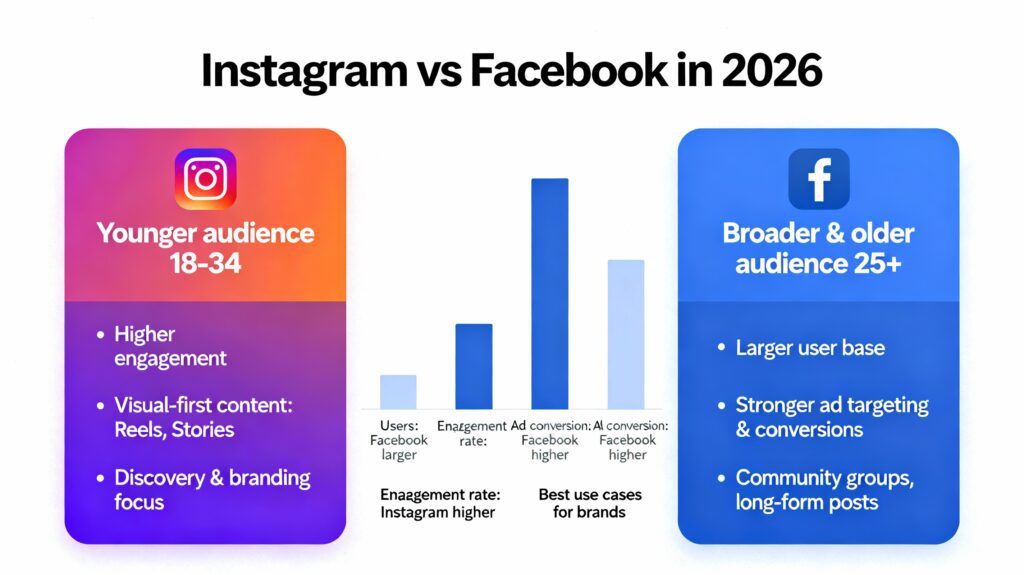
Audience Comparison: Who Uses Which Platform?
Understanding the target audience is the first step in comparing Instagram vs Facebook.
Facebook Audience in 2026
- Large user base: 3+ billion users globally
- Age group: Mostly 25–55+
- Popular for: Groups, community discussions, marketplace, long posts, event promotions
Facebook continues to attract mature users, families, groups, and local communities. If your business focuses on home services, real estate, education, healthcare, or local advertising, Facebook still performs strongly.
Instagram Audience in 2026
- 2+ billion active users
- Age group: Mostly 16–38
- Popular for: Influencers, fashion, travel, beauty, fitness, entertainment, reels, short videos
Instagram is more visual, fast-paced, and trend-driven. Younger users prefer Instagram because it feels more modern, clean, and aesthetic-driven.

Engagement: Where Do People Interact More?
When comparing Instagram vs Facebook, engagement is one of the biggest differences.
Instagram Engagement
Instagram engagement is high because:
- Reels dominate the platform
- Users interact through comments, likes, story replies, saves, and shares
- Aesthetic and visual content performs better
Instagram’s algorithm gives more reach to:
- Reels
- Carousel posts
- Trending audio
- Shareable content
Brands and creators often grow faster on Instagram because the platform supports visibility and viral content.
Facebook Engagement
Facebook engagement exists, but it has changed. In 2026, most engagement comes from:
- Facebook Groups
- Facebook Marketplace
- Facebook Reels
- Local Content
Traditional posts with text and images don’t get the same reach as before.

Content Style: What Works Best on Each Platform?
The content format is another major factor when comparing Instagram vs Facebook.
Content That Works Best on Instagram
- Reels
- Aesthetic photos
- Stories
- Influencer collaborations
- Short, trendy content
- Carousels with tips, guides, or value
Instagram is a visually driven platform, and content must be attractive, creative, and engaging.
Content That Works Best on Facebook
- Long captions
- Articles
- Links to websites
- Group posts
- Facebook Marketplace listings
- Event promotions
- Ads targeting local audiences
- Live videos
If your brand requires storytelling, detailed content, or community involvement, Facebook provides more flexibility.

Advertising: Instagram vs Facebook for Paid Marketing
Both platforms run advertisements through Meta Ads Manager, but the results vary.
Instagram Ads
Best for brands such as:
- Beauty and fashion
- Food and lifestyle
- Fitness and travel
- Personal brands and creators
Instagram ads work especially well when the goal is:
- Brand awareness
- Engagement
- Influencer marketing
- Product showcasing
Instagram ads feel natural because users already consume digital products visually.
Facebook Ads
Best for:
- Local businesses
- E-commerce
- Real estate
- Courses and education
- Services and coaching
Facebook Ads allow detailed targeting based on interests, age, location, and behavior. It is also better for lead generation, retargeting, and long-term marketing funnels.
E-Commerce and Business Features: Which Platform Helps Sell More?
E-commerce continues to grow, so the Instagram vs Facebook comparison must include shopping features.
Instagram Shopping
- Product tags
- Influencer collaborations
- Video product demos
- Reels with call-to-action
Great for impulse buying and visually appealing items.
Facebook Commerce
- Facebook Marketplace
- Facebook Shops
- Local selling
- Group selling
Facebook wins for local selling and service-based businesses.

Final Verdict: Instagram vs Facebook — Which Platform Is Better in 2026?
Choosing between Instagram vs Facebook depends on your purpose, audience, and business goals. Both platforms are powerful, but each serves a different role in digital marketing.
Choose Instagram if:
- Your audience is 16–38 years old
- You want fast growth and viral reach
- Your content is visual
- You want to build a personal brand or influencer presence
Choose Facebook if:
- Your audience is 25–60+
- You run a local or service-based business
- You want to build community or long-term customer relationships
- You need lead generation and retargeting ads
Best Strategy in 2026: Use Both
The smartest approach is to use both platforms together. Post viral and engaging content on Instagram, and use Facebook for community building, retargeting, and conversion.

Final Thoughts
The debate of Instagram vs Facebook will continue as both platforms evolve. But in 2026, the best platform isn’t about popularity—it’s about alignment. The right platform is the one where your target audience is active and where your content performs best.
So instead of choosing just one, ask yourself:
- Where are my customers spending time?
- Which content format fits my brand?
- What is my goal—reach or revenue?
Once you answer these questions, the winner of Instagram vs Facebook becomes clear for your strategy.
If you’re new to online marketing, you may also like reading our guide on What is Digital Marketing and Its 7 Components? to better understand how platforms like Instagram and Facebook fit into a complete marketing strategy.
Pingback: Is SEO Dead in 2026? No, It's Evolving in the AI Era